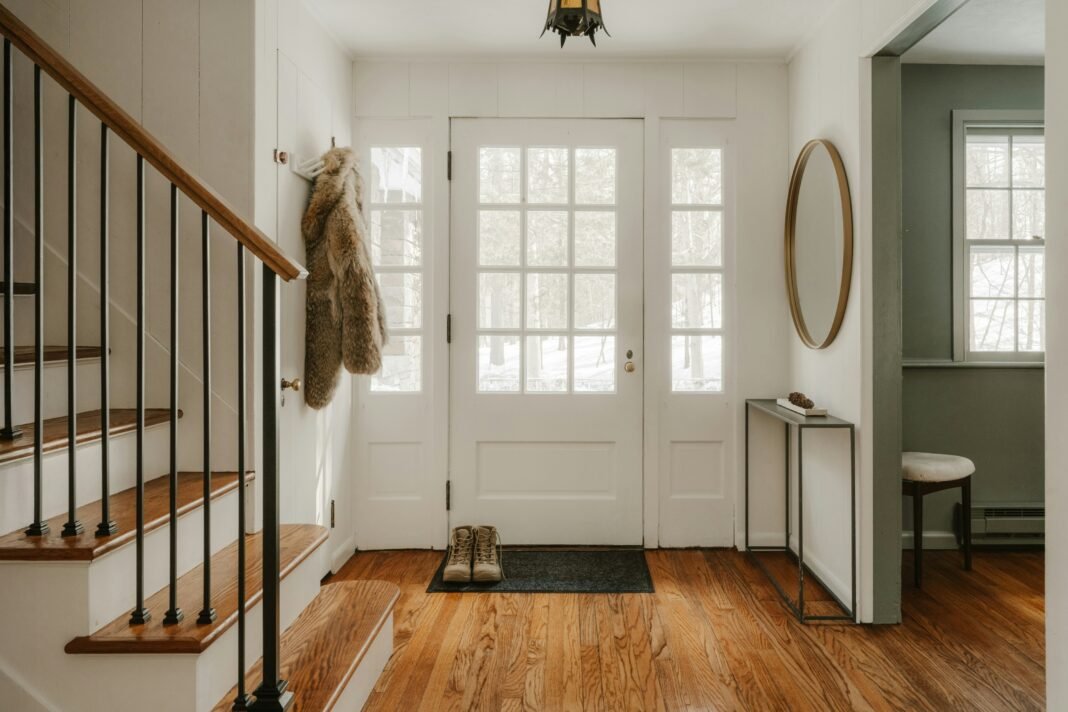

Your front door is the first thing anyone sees when they arrive, and it quietly sets the tone for the whole house. Get it right and the whole frontage lifts; get it wrong and even a well-kept home can look a little off. The good news is that choosing one is more manageable than it first appears, because it comes down to four decisions you make together: style, material, security and budget.
This guide walks you through all four. Whatever you own, a Victorian terrace, a 1930s semi or a new build, the aim is the same: a door that looks like it belongs, performs well through a British winter, and gives you years of service without any regrets.
Front Door Styles Explained
Front door styles broadly follow the era a house was built in, so the quickest way to narrow the field is to read your home’s age and architecture first. Here are the main styles you will come across in the UK.
- Victorian. Typically a four-panel door, often with decorative or stained and coloured glass in the upper panels.
- Georgian. Six-panel, symmetrical and restrained, frequently topped with a fanlight above the door.
- Edwardian. Lighter than Victorian, with a larger glazed upper section and simpler, cleaner lines.
- Cottage, stable and ledge-and-brace. Plank-built, chunky and informal, these suit rural and character homes where a panelled door would look too formal.
- Modern and contemporary. Flush faces, bold colours, oversized glazing and minimal ironmongery, designed to feel clean and understated.
To match a style to your home, start with the era. A period property usually looks best with a door sympathetic to its original design, right down to the panel count and the glazing. On a new build or a renovated open-plan space, a flush contemporary door sits far more naturally than a reproduction Victorian one would.
The classic panelled door, Victorian four-panel in particular, predominates across the UK’s period housing stock, while flush contemporary doors are the norm on new builds.
Front Door Materials Compared
The material you choose shapes the door’s character, how warm it keeps the house, how secure it is, how much upkeep it needs and what it costs. Here is an honest comparison of the four main options.
- Timber: the most authentic and characterful choice, repairable over a long life, higher cost, needs periodic finishing and maintenance.
- Composite: low upkeep and strong all-rounder on warmth and security, mid-range cost, wide choice of finishes including woodgrain effects.
- uPVC: the budget-friendly option with decent insulation, limited style authenticity and harder to repair or refinish.
- Steel and aluminium: slim sightlines and strong security for contemporary builds, at a higher price.
Timber is the natural fit where a door needs to match a home’s original features. Because wood can be made to authentic profiles, it suits period and conservation-area properties in a way that moulded materials struggle to match. It is also repairable: a timber door can be sanded, repaired and repainted over a long life rather than replaced whole, which is part of why it lasts so well when properly finished and periodically maintained. If you are after that authentic look and want it made to measure, it is worth talking to a specialist maker of timber front doors who works to traditional profiles.
Composite doors are built from a GRP (glass-reinforced plastic) skin over an insulating foam or timber core. That construction gives them strong thermal and security performance with very little upkeep, and the finishes now include convincing woodgrain effects, which is why they are a popular all-rounder.
uPVC is the budget-friendly choice. It insulates reasonably well and is cheap to buy, but it offers limited style authenticity and is harder to repair or refinish once it ages or is damaged, so it tends to be replaced rather than restored.
Steel and aluminium doors are a smaller part of the market but worth knowing about. They allow slim sightlines and large glazed panels with strong security, which suits sharp contemporary builds, though they sit at the higher end on cost.
Matching the Door to Your Property
The best front door is the one that reads correctly for your home’s era, proportions and street. Start by looking at what is already there, then let the material and finishing choices follow.
Period homes and conservation areas. Stay sympathetic to the original style. A door in keeping with the house’s age, in material and detailing, almost always looks better than a modern substitute. Bear in mind that in conservation areas and on listed buildings, changes to a front door can be restricted, so check with your local authority before you commit rather than assuming what is allowed.
New builds and contemporary homes. This is where flush faces, bold statement colours and oversized glazing come into their own. A clean, minimal door suits the architecture and the lighter, more open interiors behind it.
Terraces versus detached and semi-detached. Scale and proportion matter. On a terrace, it is worth looking at what the street already does, since a row of houses often shares a rhythm of door styles and colours that a sympathetic choice can work with. A larger detached house can carry a grander door and a bolder colour than a narrow terrace front.
Finishing choices make or break the look. Colour sets the mood, glazing changes how much light reaches the hall and how much privacy you keep (clear, obscured, or stained and leaded), and the ironmongery, the knocker, letterplate, handle and house numerals, is the jewellery that ties it together. These small details are often what separates a door that looks considered from one that looks like a default.
Security, Energy Efficiency and Building Regulations
Security. Look for multi-point locking and recognised benchmarks rather than vague reassurances. PAS 24 is the standard for enhanced security performance on doors and windows, and Secured by Design is the police-backed scheme often referenced for new-build compliance. Treat those as the things to ask about, rather than any “unbreakable” claim.
Energy efficiency. An insulated core, good weatherseals and draught-proofing, and the right glazing can all help reduce heat loss through the door. How much difference you see depends on the door, the installation and the rest of the house, so think of it as part of a warmer, less draughty home rather than a single fix.
Building regulations. Replacing a front door is covered by Building Regulations in England and Wales, which set requirements for energy efficiency and safety. In practice, that usually means confirming your installer self-certifies the work under a competent-person scheme, or that building control is notified. For anything touching planning, conservation areas or listed buildings, check the Planning Portal, your local authority, and Historic England for heritage properties, rather than relying on a promised outcome.
What a New Front Door Costs in the UK
As a rough guide, here are indicative installed price ranges by material. Treat these as approximate: the real figure varies with specification, size, glazing, security rating and your region.
- uPVC: approximately £450 to £1,200 fitted, usually the entry point for a new installed front door.
- Composite: approximately £900 to £2,500 fitted, reflecting the stronger thermal and security performance.
- Timber and bespoke: approximately £1,200 to £3,500 and up fitted, because they are made to measure and to specific profiles.
Taken together, most installed front doors fall within a typical overall range of around £450 to £2,500, with simple uPVC at the bottom and bespoke timber at the top. Treat these figures as indicative: the final cost varies by door specification, size, glazing and installer.
What drives the price is mostly the specification: off-the-shelf versus bespoke, the size and amount of glazing, the ironmongery, the security rating and how complex the installation is. Bespoke and timber doors sit higher precisely because they are made to measure and worked to specific profiles. For a character home, a higher upfront cost can make sense over the door’s lifetime, since a well-made timber door that is maintained can be repaired and refinished rather than replaced.
Front Door Styles and Materials: Your Questions Answered
What is the most popular front door style?
The panelled door, particularly the Victorian four-panel design, is the most common choice across the UK’s older housing stock. On newer properties, flush contemporary doors tend to dominate. The “most popular” choice is really the one that suits your property’s era.
What are the trends for front doors in 2026?
Larger glazed panels are gaining ground, bringing more natural light into hallways. Colour-wise, the move is toward heritage and nature-inspired tones, muted greens, warm earthy shades and off-whites, rather than the bold navies and reds that peaked earlier this decade. Ironmongery is shifting away from true matte black toward warmer living finishes: aged brass, bronze and softer graphite. Sustainably sourced timber is also drawing renewed interest as homeowners look for materials with longevity and repairability. These are directions rather than rules, and a door that suits your house will always outlast a passing trend.
What does a new front door cost?
Fitted prices are roughly £450 to £1,200 for uPVC, £900 to £2,500 for composite and £1,200 to £3,500 and up for timber or bespoke, giving a typical overall range of around £450 to £2,500. These figures are indicative; the exact cost depends on the specification, size, glazing, security rating and installer.
What is the best material for a front door?
It depends on your priorities. For character and period authenticity, timber is hard to beat; for low upkeep and strong all-round value, composite is the sensible pick; and on a tight budget, uPVC does the job. There is no single winner, only the best fit for your home and how you want to live with it.
How do I choose a front door to suit my house?
Read your home’s era, proportions and street first, then match the style to it, and finally choose the material that balances your budget, upkeep appetite and any regulations that apply. Work in that order and the choice tends to make itself.