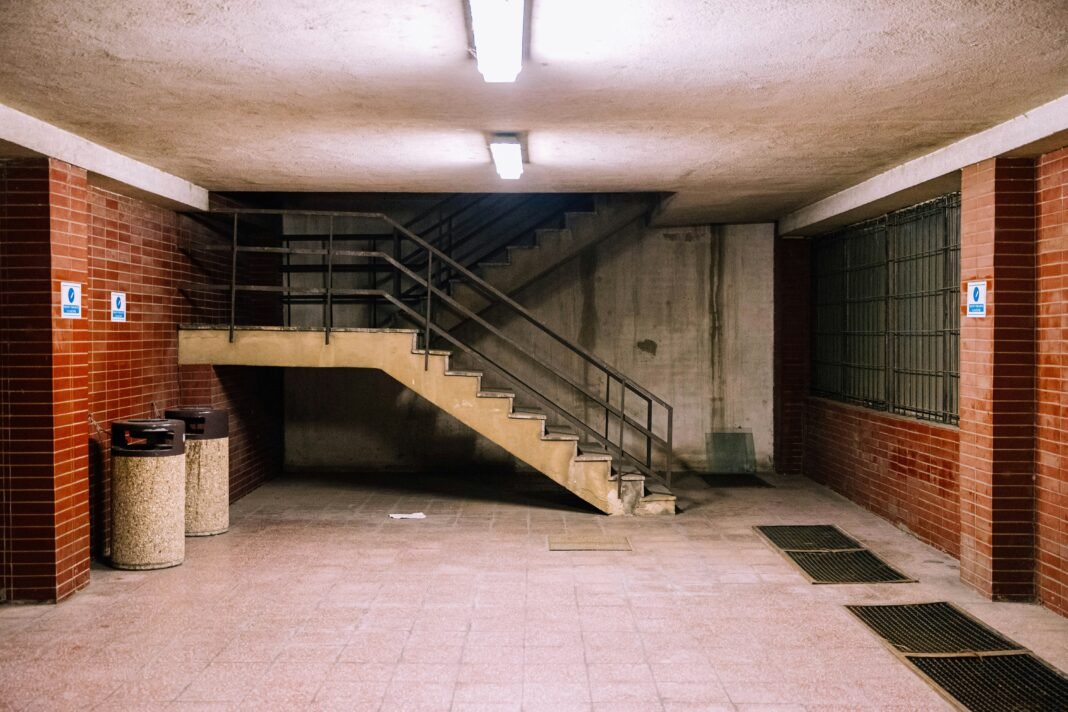

Finishing a basement can add a surprising amount of useful space to a home. An unfinished lower level can become a family room, home office, gym, guest room, playroom, or simply a more comfortable place for storage.
It is also a project that can get expensive quickly. Flooring, drywall, insulation, electrical work, lighting, and trim all add up. That makes it especially important to check for moisture problems before any of those materials cover the foundation.
A basement may look completely dry on the day a renovation begins and still have a history of water problems. Some leaks only appear after prolonged rain. Others show up during certain seasons or when groundwater levels rise.
Once finished walls and flooring are installed, finding and correcting the source of that moisture can become much more difficult.
Before starting a basement renovation, spend some time checking what is happening underneath the surfaces you are about to cover.
1. Look for Signs of Past Water, Not Just Active Leaks
You do not need to find a puddle on the basement floor to discover evidence of a moisture problem.
Walk around the perimeter and look closely at the foundation walls. Pay particular attention to the bottom few feet and the area where the wall meets the floor.
Possible signs of previous water include:
- Dark or discolored areas
- Peeling or bubbling paint
- White mineral deposits on masonry
- Rust on nearby metal
- Staining around cracks
- Water marks along walls
- Damaged boxes or stored belongings
Check behind shelving and furniture as well. Areas that have been covered for years can sometimes reveal moisture that was not obvious elsewhere in the room.
If you recently bought the house, these clues are especially valuable because you may not yet know how the basement behaves through every season.
2. Inspect the Basement After Heavy Rain
A sunny afternoon is not always the best time to determine whether a basement stays dry.
If your renovation schedule allows it, check the basement during or shortly after a substantial rainstorm.
Walk around the walls and look for new damp areas. Check corners, foundation cracks, window wells, pipe penetrations, basement doors, and the seam between the floor and wall.
You may find a small trickle or damp spot that disappears within a day.
That might not seem like a major problem in an unfinished basement with a concrete floor. Once drywall, insulation, baseboards, and finished flooring are added, however, even occasional moisture can cause headaches.
It is much easier to investigate a suspicious area while the foundation is still visible.
3. Pay Attention to Musty Odors
Sometimes your nose notices a moisture problem before your eyes do.
A persistent musty or earthy smell can indicate that something in the basement is staying damp. Do not assume that new carpet, paint, or air fresheners will solve the problem.
Instead, try to determine where the odor is coming from.
Inspect cardboard boxes, wooden shelving, rugs, furniture, and other materials that may have absorbed moisture. Also look closely around areas with limited airflow, including closets and corners.
The U.S. Environmental Protection Agency notes that moisture control is an important part of preventing mold problems in the home. Its guide to mold and moisture provides useful information for homeowners dealing with damp indoor spaces.
If a basement consistently smells damp, find the reason before enclosing it behind new finishes.
4. Measure the Humidity
Basements often feel cooler and slightly damper than the rest of the house, but it can be difficult to judge humidity simply by walking into the room.
A small digital hygrometer can provide a much clearer picture.
Place one in the basement and monitor the relative humidity over several days. Check it during different weather conditions if possible.
ENERGY STAR recommends keeping indoor relative humidity generally between 30 and 50 percent. Higher humidity can contribute to condensation and conditions that encourage mold growth. Their dehumidifier guidance also explains how homeowners can manage excess moisture in the air.
A dehumidifier can be very useful when the problem is humid air.
It is important, however, to distinguish humidity from actual water intrusion. A dehumidifier may help a basement feel more comfortable, but it should not be expected to solve water entering through a foundation wall, floor, crack, or opening.
5. Take a Walk Around the Outside of the House
Sometimes the best clues about a wet basement are found outdoors.
Wait until the next rain or take a careful walk around the property beforehand.
Start with the gutters and downspouts. Gutters should be able to carry water away without overflowing, and downspouts should discharge far enough from the foundation that the same water does not immediately soak back into the ground beside the house.
Then look at the grading.
Ideally, the soil around the house should encourage surface water to move away from the foundation rather than toward it. Low spots beside the home can allow water to collect during storms.
Check window wells too. Leaves, debris, poor drainage, or improper covers can allow significant amounts of water to collect around basement windows.
Correcting exterior drainage problems can sometimes reduce the amount of moisture reaching the foundation in the first place.
6. Examine Foundation Cracks Before Covering Them
Cracks in concrete and masonry are common, and they do not all mean the same thing.
Some remain dry and unchanged for decades. Others can provide a pathway for water under the right conditions.
Before building a finished wall in front of a visible crack, inspect it carefully.
Look for staining, mineral deposits, dampness, or evidence that water has traveled along the crack. Taking a photograph can also be helpful so you have a record of what it looked like before construction began.
Recurring water entry deserves additional attention.
If water repeatedly appears through foundation cracks, around the floor-wall joint, or through the basement floor, it makes sense to determine the cause before the area is enclosed. Long Island homeowners dealing with these types of problems can have the basement evaluated by ACM Basement Waterproofing before moving forward with finish materials.
The objective should be to address the source of the water rather than simply hide the evidence of it.
7. Choose Basement Flooring With Moisture in Mind
Flooring can dramatically change the appearance of a basement, but below-grade floors have different considerations than floors on the upper levels of a home.
Before installing carpet, laminate, vinyl, hardwood, tile, or another material, think about the history of the concrete slab underneath it.
Has the floor ever felt damp?
Are there stains from previous water?
Does moisture appear around the perimeter after storms?
Covering a problem does not eliminate it. In some cases, it simply makes the problem harder to notice until the flooring itself becomes damaged.
The Centers for Disease Control and Prevention advises against using carpet in areas that are likely to become wet, including basements that experience significant moisture. Its information on mold and dampness offers additional guidance on keeping indoor environments dry.
Choose flooring based on both the appearance you want and the conditions of the basement where it will be installed.
8. Make Sure the Renovation Is Not Hiding a Problem
This is one of the easiest mistakes to make during a basement remodel.
An unfinished foundation wall may look unattractive. Adding framing, drywall, paint, and trim immediately makes the room feel cleaner and more inviting.
But those materials can also hide what is happening behind them.
The same thing can happen with flooring. A stained concrete slab disappears underneath a beautiful finished floor, even though the moisture that caused the staining may still be present.
Before covering anything, ask yourself a simple question:
Am I fixing this issue, or am I just making it harder to see?
If something looks suspicious, investigate it while the basement is still open and accessible.
The solution may be relatively straightforward, such as cleaning gutters, extending downspouts, improving exterior grading, sealing an opening, or controlling indoor humidity.
Other situations may require professional evaluation or a more comprehensive drainage or waterproofing solution.
Either way, it is better to know before the renovation is complete.
A Better Basement Renovation Starts With a Dry Foundation
The most enjoyable parts of finishing a basement usually come near the end of the project.
That is when you get to choose flooring, lighting, paint colors, furniture, shelving, and decorations that make the space feel like another part of the home.
The work that protects those improvements happens much earlier.
Spend some time checking the basement after rain. Look for old stains. Inspect visible cracks. Measure humidity. Walk around the exterior of the house and see where rainwater is going.
None of these steps are particularly exciting, but they can help reveal problems while they are still relatively easy to see and address.
Once you are confident that the basement is staying dry, you can move forward with the renovation knowing that the materials you are installing have a much better foundation to build on.